
How Jinze Crafts Operates as a Custom Wedding Proposal Ring Box Furniture Shape Manufacturer for European Retailers
WENZHOU, ZHEJIANG, CHINA, October 12, 2026 /EINPresswire.com/ -- The global jewelry packaging sector has seen a
Press Release Disclaimer: This is a press release distributed through the XPR Media network. It has not been independently verified by our newsroom.
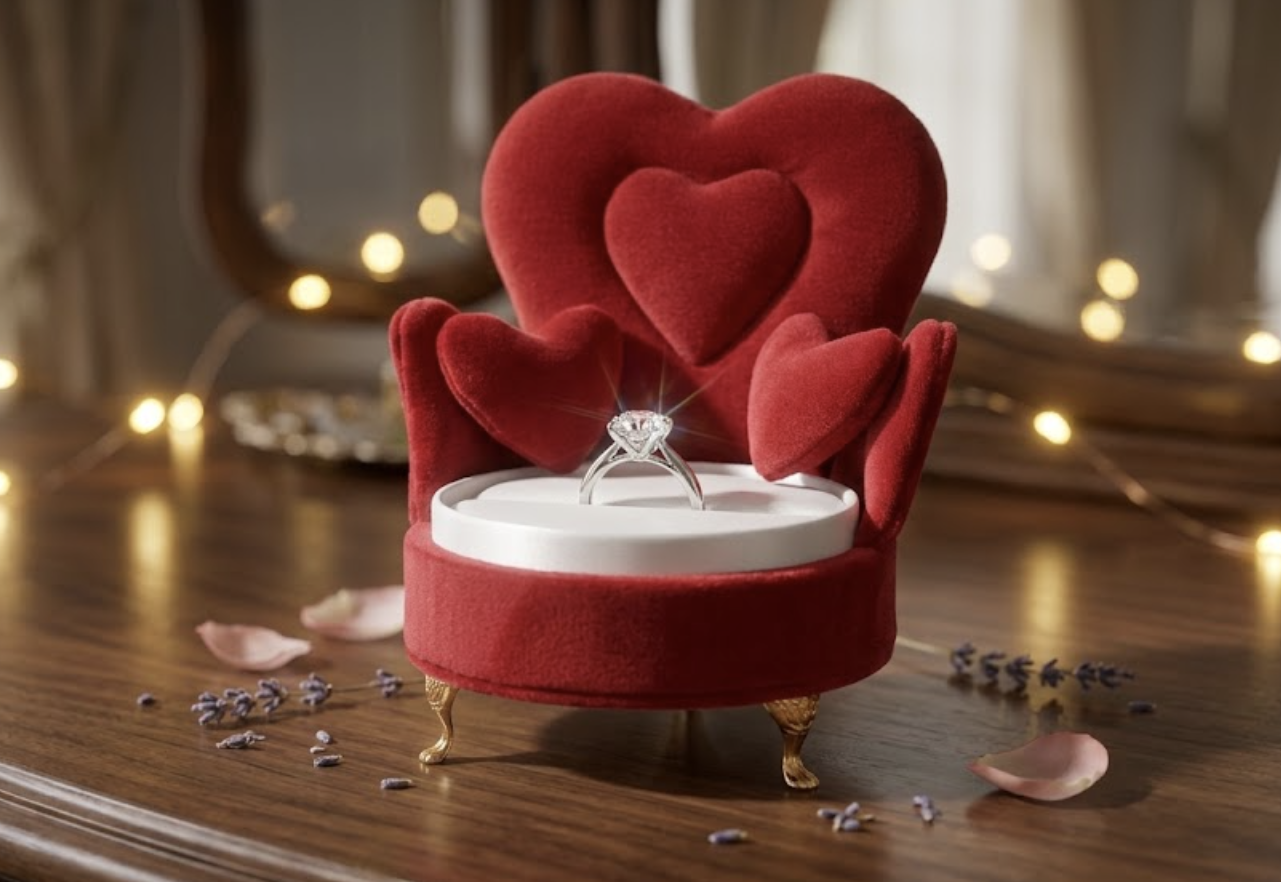

WENZHOU, ZHEJIANG, CHINA, October 12, 2026 /EINPresswire.com/ — The global jewelry packaging sector has seen a distinct shift toward novel presentation formats that elevate the consumer unboxing experience. Within this evolving market, European jewelry retailers increasingly seek specialized manufacturing partners. Operating as a Custom Wedding Proposal Ring Box Furniture Shape Manufacturer for European Retailers requires a unique synergy between traditional furniture design principles and micro-scale packaging engineering. Rather than treating presentation boxes as disposable containers, modern brands use thematic keepsakes to create emotional connections. These products include velvet-upholstered armchairs and miniature sofas designed for significant life milestones like marriage proposals. This technical manufacturing model combines specialized structural tooling, strict chemical safety compliance, and hand-tailored craftsmanship. Consequently, producing these intricate miniature furniture pieces demands an integrated industrial framework. This operational process spans from CAD concept development to international freight logistics.
Engineering Miniature Furniture: Translating Architectural Concepts into Functional Ring Packaging
Designing miniature furniture packaging presents structural challenges that standard rectangular ring boxes do not encounter. Engineers must translate full-scale furniture silhouettes—including backrests, armrests, tufted cushions, and elevated legs—into compact, handheld items. However, they must accomplish this without sacrificing structural stability or internal functionality. The development phase begins with precise 2D vector layouts and 3D computer-aided design models. These digital renders establish exact proportions, ensuring that the ring slot, internal mirror, and closing mechanism fit seamlessly inside the miniature chair frame.
Furthermore, structural integrity remains a central focus during the design process. Unlike flat-surfaced boxes, furniture-shaped structures feature compound curves and asymmetrical balance points. Designers must calculate wall thickness and internal load distribution so the box maintains its structural shape when open. Proprietary design patents, such as design patent ZL 2019 3 0394790.X, reflect the technical rigor required to secure complex structural configurations for commercial distribution. Intellectual property protection provides European retailers with unique, non-infringing packaging options that differentiate their brand portfolios in competitive retail environments. By combining aesthetic elegance with functional geometry, specialized manufacturers transform decorative concepts into reliable commercial packaging solutions.
Tooling and Core Molding: Achieving Structural Rigidity in Curved Velvet Formats
The transition from digital rendering to physical manufacturing relies heavily on precision mold making. Achieving structural rigidity in curved velvet packaging requires high-density internal skeletons capable of resisting deformation during assembly and transit. Manufacturers utilize precision injection-molded ABS plastics or specialized high-density rigid board combinations to form the inner core. These materials provide the necessary firmness while remaining lightweight enough for efficient export shipment.
Mold creation for furniture shapes involves multi-piece tooling. Components such as heart-shaped backrests, contoured armrests, and hollow bases are molded individually before structural integration. Each mold component must maintain strict dimensional tolerances within fractions of a millimeter. Even minor variances can prevent the internal foam ring insert or flip-top mirror lid from closing smoothly. Additionally, the base frame must feature reinforced mounting points to accommodate electroplated alloy legs. These metal hardware components elevate the box off surfaces, enhancing its furniture appearance while providing physical stability. Precise tooling ensures that every molded core provides a flawless foundation for subsequent fabric application and hand assembly.
The Human Factor: How 20-Year Veteran Artisans Master Fine Upholstery and Seam Line Precision
While automated machinery molds the internal skeleton, the wrapping and upholstery processes require skilled human labor. Zhejiang Jinze Crafts Co.,Ltd operates an integrated facility where a 150-person production team executes complex assembly lines. Within this facility, workshop artisans possessing over 20 years of individual craft experience handle the most technical manual steps. Their hands-on expertise proves essential when applying plush velvet fabrics over tight compound curves and small radius edges.
Applying velvet to miniature furniture demands meticulous tension control. Artisans stretch high-grade velvet across curved backrests and recessed seats, ensuring uniform fabric tension without causing wrinkles or pile distortion. The process requires specialized non-toxic adhesives applied at precise temperatures to guarantee long-term bonding without bleeding through the fabric. Artisans carefully tuck and seal fabric edges inside seam lines around miniature armrests. This creates clean transitions that mimic high-end residential upholstery. They then install custom high-density foam inserts wrapped in matching velvet to hold proposal rings securely. Finally, workers mount hardware components—including micro-hinges, mirror fittings, and decorative alloy feet—with exact alignment to complete the miniature furniture unit.
Quality Assurance & European Compliance: Standardizing BSCI and Chemical Safety at Scale
European retail networks enforce strict regulatory and ethical benchmarks for imported goods. Consequently, custom packaging manufacturing must incorporate structured quality assurance protocols at every operational stage. Facilities holding Business Social Compliance Initiative (BSCI) certification demonstrate adherence to ethical labor standards, workplace safety, and fair environmental practices. These social audits provide European buyers with clear transparency regarding factory conditions and corporate responsibility.
Chemical safety represents another crucial aspect of European compliance. Raw materials, including velvet fabrics, structural adhesives, internal foams, and metallic platings, undergo thorough testing to ensure compliance with European REACH standards. Tests verify the absence of harmful substances such as heavy metals, formaldehyde, and phthalates. Simultaneously, physical testing protocols evaluate product durability under real-world conditions. Quality control inspectors subject sample units to hinge opening-closing cycle tests, fabric colorfastness evaluations, and drop tests. These procedures verify that the ring box retains its aesthetic finish and structural integrity throughout transit and retail display. By maintaining stringent compliance frameworks, manufacturers prevent supply chain disruptions and safeguard brand reputation.
Scaled Supply Chain Execution: From Handcrafted Prototype to European Retail Distribution
Scaling custom packaging from initial concept to mass distribution requires established international trade capabilities. With over 25 years of industry-trade integration, experienced manufacturers effectively manage both original equipment manufacturing (OEM) and original design manufacturing (ODM) workflows. This experience enables smooth communication with international buyers, transforming abstract retail ideas into market-ready packaging lines. Furthermore, established export procedures ensure efficient handling of customs clearance, shipping documentation, and regulatory compliance across diverse European markets.
Logistics engineering plays a critical role in controlling distribution costs for high-volume orders. Because furniture-shaped ring boxes feature unique geometries, standard outer cartons can lead to unused volume during freight transport. Packaging engineers design custom nested inner boxes and high-strength corrugated outer cartons. These packing solutions protect delicate fabric surfaces and metallic feet while maximizing container load density. This careful space planning reduces transport costs and carbon emissions per unit. Through disciplined manufacturing workflows, skilled craftsmanship, and comprehensive quality management, specialized producers supply leading global retailers, German and British supermarket chains, and specialty boutiques with premium custom packaging that enhances product value.
For further details regarding custom furniture-shaped packaging capabilities and manufacturing specifications, visit https://www.jinzecrafts.com/.
Jinze Crafts
Jinze Crafts
Legal Disclaimer:
EIN Presswire provides this news content “as is” without warranty of any kind. We do not accept any responsibility or liability
for the accuracy, content, images, videos, licenses, completeness, legality, or reliability of the information contained in this
article. If you have any complaints or copyright issues related to this article, kindly contact the author above.

Media gallery

